
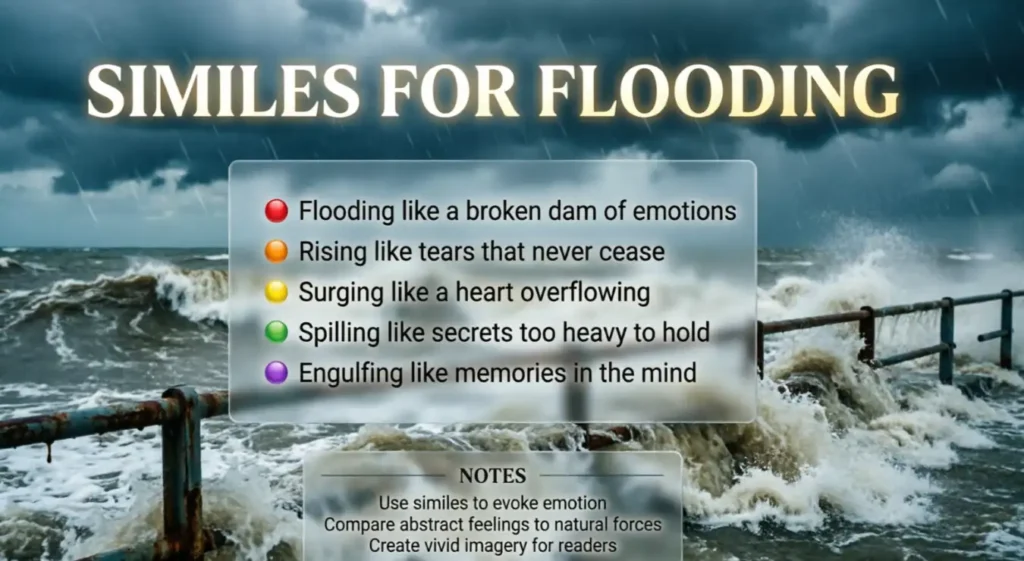
Flooding can be difficult to describe because water can move, rise, spread, and destroy things in many different ways. That is where similes can make your writing much more powerful. A simile compares one thing with another by using words such as “like” or “as.” For example, you might say, “The water rushed through the streets like a wild river.” This gives the reader a clear picture of how fast and strongly the water moved.
In simple terms, similes help readers imagine what you are describing. Instead of simply saying that a flood was large, you can compare it to something enormous, powerful, or unstoppable. As a result, your writing becomes more vivid and interesting.
If you are writing a school assignment, story, poem, news-style description, or creative paragraph, these similes for flooding can help. Let’s explore 50 creative examples, their meanings, and simple simile sentences you can use as inspiration.
50 Similes for Flooding
1. The flood spread like a giant blanket
Meaning: The water covered a large area.
Explanation: This simile compares the spreading floodwater to a blanket covering everything beneath it. It creates a picture of water stretching across streets, fields, and homes.
Examples:
- The flood spread like a giant blanket across the valley.
- Water covered the fields like a giant blanket after the storm.
2. The water rushed like a wild river
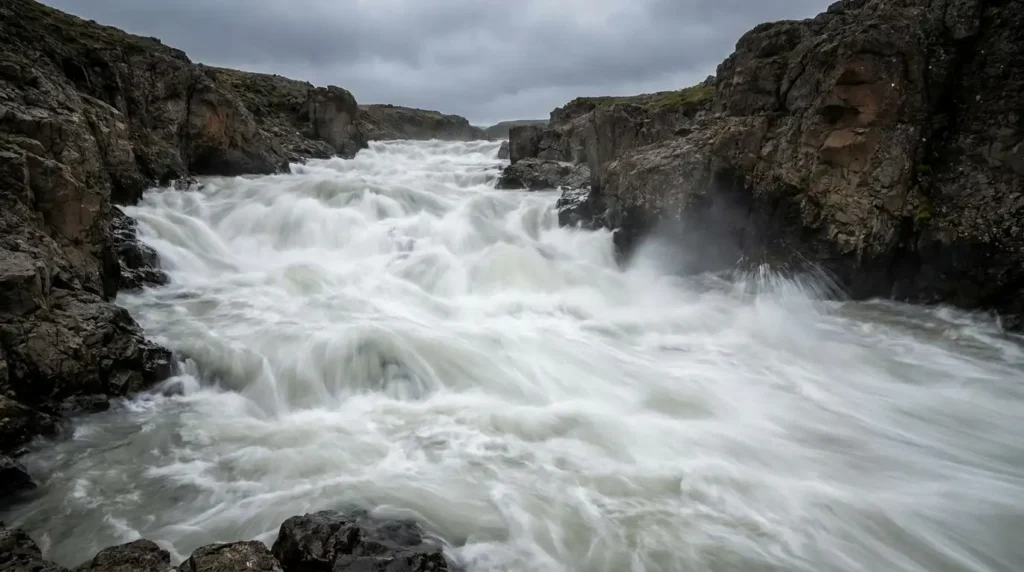
Meaning: The water moved very quickly and forcefully.
Explanation: This comparison shows that the flood was powerful and difficult to stop. It helps readers imagine strong currents sweeping through an area.
Examples:
- The water rushed like a wild river through the streets.
- Floodwater moved like a wild river across the road.
3. The flood rose like a giant wave
Meaning: The water level increased quickly and dramatically.
Explanation: A giant wave rises and moves with great force. Comparing a flood to one makes the rising water seem powerful and frightening.
Examples:
- The flood rose like a giant wave after hours of rain.
- Water climbed the streets like a giant wave.
4. The streets filled like overflowing bathtubs
Meaning: The streets became filled with water very quickly.
Explanation: This simile gives a familiar picture of water reaching and passing the edge of a bathtub. It makes the amount of floodwater easy to imagine.
Examples:
- The streets filled like overflowing bathtubs during the storm.
- Roads became flooded like overflowing bathtubs.
5. The rain fell like a waterfall
Meaning: Heavy rain poured down continuously.
Explanation: A waterfall releases a large amount of water at once. This comparison emphasizes the intensity of the rainfall that caused the flooding.
Examples:
- Rain fell like a waterfall throughout the night.
- The storm poured down like a waterfall over the town.
6. The flood moved like a hungry beast
Meaning: The flood seemed powerful and destructive.
Explanation: A hungry beast moves forward searching for something. Comparing floodwater to one creates a strong image of unstoppable destruction.
Examples:
- The flood moved like a hungry beast through the village.
- Water swept across the land like a hungry beast.
7. The water spread like spilled ink
Meaning: The floodwater quickly covered a wide area.
Explanation: Spilled ink spreads across paper and is difficult to contain. This comparison shows how quickly water can spread over streets and land.
Examples:
- The water spread like spilled ink across the fields.
- Floodwater covered the roads like spilled ink.
8. The flood was like an endless sea
Meaning: The flooded area seemed extremely large.
Explanation: When everything is covered with water, the landscape may look like a sea with no clear end. This simile emphasizes the enormous size of the flood.
Examples:
- The town looked like an endless sea after the storm.
- The fields became like an endless sea of muddy water.
9. The water climbed like a silent monster
Meaning: The water slowly rose while creating fear.
Explanation: A silent monster suggests something dangerous that approaches without making much noise. This creates a tense image of rising floodwater.
Examples:
- The water climbed like a silent monster toward the houses.
- Floodwater rose like a silent monster during the night.
10. The flood swept through the town like a broom
Meaning: The flood moved through the town and carried things away.
Explanation: A broom pushes objects across a surface. This comparison shows how floodwater can sweep away belongings, branches, and debris.
Examples:
- The flood swept through the town like a giant broom.
- Fast-moving water carried debris away like a broom.
11. The water poured in like a broken dam
Meaning: A huge amount of water entered suddenly.
Explanation: A broken dam can release enormous amounts of water. This simile emphasizes the sudden and powerful arrival of floodwater.
Examples:
- Water poured into the streets like a broken dam.
- The river overflowed like a broken dam.
12. The flood covered the land like a wet sheet
Meaning: Water spread across the land and covered its surface.
Explanation: A wet sheet lies over and covers a surface. The comparison shows how floodwater can hide roads, fields, and low-lying areas.
Examples:
- Floodwater covered the farmland like a wet sheet.
- The valley looked covered like a wet sheet of water.
13. The river swelled like a giant snake
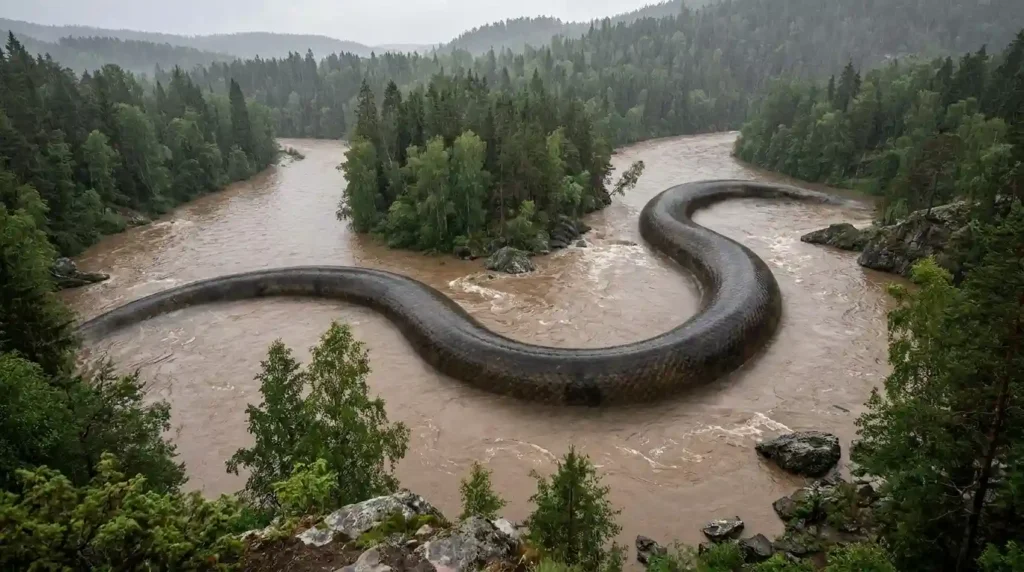
Meaning: The river became larger and spread beyond its normal path.
Explanation: A snake can stretch and wind through an area. This comparison gives the swollen river a vivid and moving shape.
Examples:
- The river swelled like a giant snake after the rain.
- Water twisted through the valley like a giant snake.
14. The flood rushed like a charging bull
Meaning: The water moved with great force and speed.
Explanation: A charging bull is strong, fast, and difficult to stop. This makes the flood seem equally powerful.
Examples:
- The flood rushed like a charging bull toward the bridge.
- Water crashed through the streets like a charging bull.
15. The rain came down like curtains
Meaning: Very heavy rain fell continuously.
Explanation: Heavy rain can look like thick curtains hanging from the sky. This comparison creates a strong visual image.
Examples:
- Rain fell like curtains over the flooded town.
- Thick rain came down like curtains all afternoon.
16. The flood spread like fire
Meaning: The flood expanded quickly over a large area.
Explanation: Fire can spread rapidly from one place to another. Comparing flooding to fire highlights how quickly the water moved.
Examples:
- The flood spread like fire across the lowlands.
- Water moved through the streets like fire across dry grass.
17. The water roared like a lion
Meaning: The flood made a loud and powerful sound.
Explanation: Lions are known for their deep roars. This simile focuses on the frightening noise created by fast-moving floodwater.
Examples:
- The river roared like a lion beneath the bridge.
- Floodwater sounded like a lion as it crashed against the walls.
18. The flood rose like a wall
Meaning: The water level became very high.
Explanation: A wall stands tall and blocks a path. Comparing rising water to a wall shows how threatening and overwhelming it became.
Examples:
- The flood rose like a wall around the village.
- Water stood like a wall outside the house.
19. The water flowed like a giant snake
Meaning: The flood moved in a winding path.
Explanation: A snake moves by twisting and turning. This comparison works well when describing water winding through streets or fields.
Examples:
- The water flowed like a giant snake through the neighborhood.
- Floodwater twisted like a giant snake between the buildings.
20. The flood swallowed the streets like a giant mouth
Meaning: The water completely covered the streets.
Explanation: A giant mouth swallowing something suggests that the streets disappeared beneath the floodwater. It creates a dramatic image of complete coverage.
Examples:
- The flood swallowed the streets like a giant mouth.
- Water swallowed the roads like a giant mouth opening wide.
21. The water moved like a rushing army
Meaning: The flood advanced with strength and force.
Explanation: An army moving forward can be difficult to stop. This comparison makes the flood seem powerful and unstoppable.
Examples:
- The water moved like a rushing army toward the town.
- Floodwater advanced like an army across the fields.
22. The flood poured over the roads like melted glass
Meaning: Water flowed smoothly and widely over the roads.
Explanation: Melted glass can spread across a surface. This simile gives the flooded roads a strange, smooth appearance.
Examples:
- Water covered the highway like melted glass.
- The flooded road shone like melted glass beneath the rain.
23. The river burst like an opened bottle
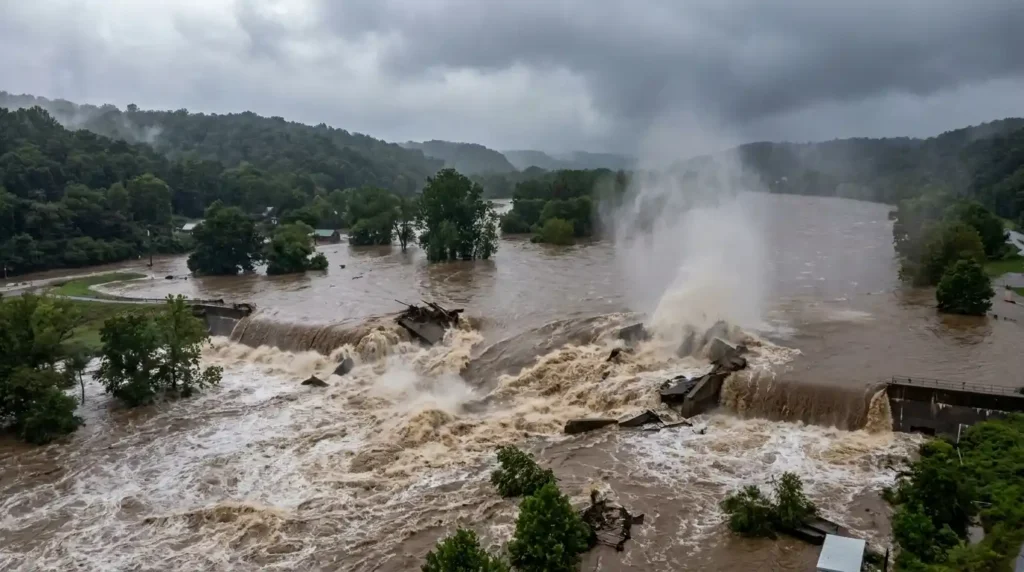
Meaning: Water suddenly escaped beyond its normal limits.
Explanation: Opening a bottle allows liquid to pour out quickly. This comparison describes sudden overflow from a river or reservoir.
Examples:
- The river burst like an opened bottle after the storm.
- Water rushed over the banks like an opened bottle.
24. The flood covered everything like a dark blanket
Meaning: Water and storm conditions made the area look completely covered.
Explanation: A dark blanket suggests something spreading over and hiding what is underneath. It can also create a gloomy mood.
Examples:
- Floodwater covered the fields like a dark blanket.
- A muddy flood lay over the town like a dark blanket.
25. The water crashed like thunder
Meaning: The floodwater moved with a loud, powerful sound.
Explanation: Thunder is loud and dramatic. Comparing floodwater to thunder emphasizes the noise and force of the moving water.
Examples:
- The water crashed like thunder against the walls.
- Floodwater sounded like thunder as it hit the bridge.
26. The flood crept like a spider
Meaning: The water slowly moved into different spaces.
Explanation: Spiders can move quietly and gradually across surfaces. This simile works well for slow-moving water entering homes or streets.
Examples:
- The flood crept like a spider across the basement floor.
- Water moved like a spider through the narrow streets.
27. The rain fell like millions of tiny stones
Meaning: The rain was heavy and hard.
Explanation: Heavy raindrops can strike surfaces with noticeable force. Comparing them to tiny stones emphasizes the intensity of the storm.
Examples:
- Rain hit the roof like millions of tiny stones.
- The storm poured down like tiny stones from the sky.
28. The flood was like a giant mirror
Meaning: The water covered the ground and reflected the surroundings.
Explanation: Still floodwater can reflect buildings, trees, and clouds like a mirror. This comparison focuses on the appearance rather than the danger.
Examples:
- The flooded street looked like a giant mirror.
- Water turned the field into a giant mirror beneath the clouds.
29. The water surged like a wave of horses
Meaning: The flood moved with wild energy and speed.
Explanation: A group of running horses creates an image of powerful movement. This simile gives the flood a sense of energy and motion.
Examples:
- The water surged like a wave of horses through the valley.
- Floodwater charged forward like running horses.
30. The flood was as deep as an ocean
Meaning: The water was extremely deep.
Explanation: An ocean represents great depth and vastness. This comparison helps readers imagine how severe the flooding became.
Examples:
- The street looked as deep as an ocean after the storm.
- The flooded field seemed as deep as an ocean.
31. The water spread like a giant shadow
Meaning: The flood gradually covered a wide area.
Explanation: A shadow can stretch across a surface and cover it. This simile creates a darker, more serious mood.
Examples:
- Floodwater spread like a giant shadow across the valley.
- The rising water moved like a giant shadow over the fields.
32. The flood rushed like a waterfall
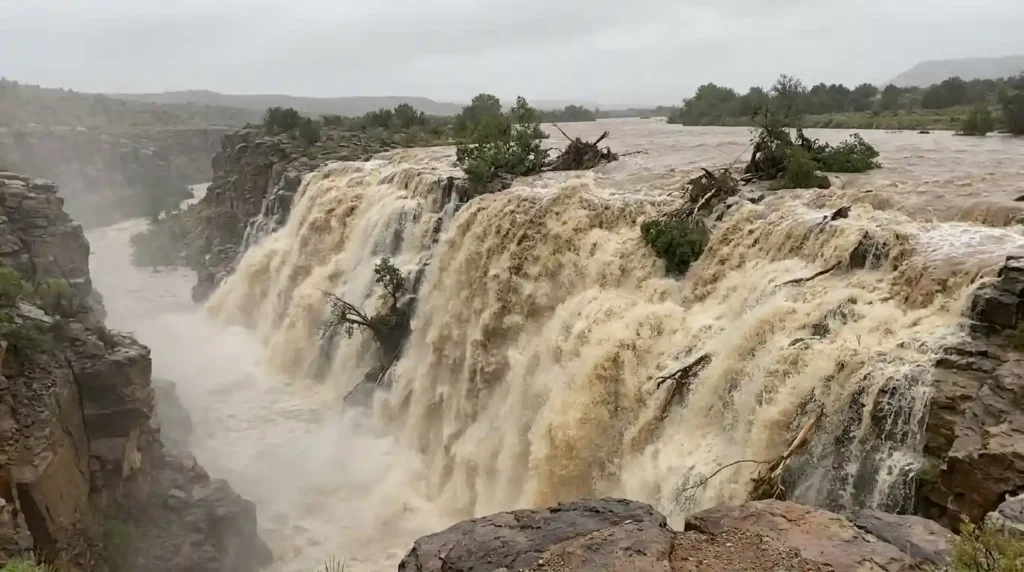
Meaning: The water moved rapidly and heavily.
Explanation: A waterfall has constant downward movement and great force. This comparison makes the flood seem fast and powerful.
Examples:
- Water rushed down the street like a waterfall.
- The flood poured through the alley like a waterfall.
33. The river expanded like a giant road
Meaning: The river became much wider than normal.
Explanation: A road stretches across a large area. Comparing an expanded river to a road emphasizes its unusual width.
Examples:
- The river expanded like a giant road across the valley.
- After the storm, the river looked like a giant road of water.
34. The flood moved like a blanket of fog
Meaning: The water spread gradually across the area.
Explanation: Fog slowly covers a landscape and changes what can be seen. This simile emphasizes the gradual spread of floodwater.
Examples:
- Water moved across the fields like a blanket of fog.
- The flood spread quietly like fog across the lowlands.
35. The water attacked like a pack of wolves
Meaning: The flood seemed aggressive and dangerous.
Explanation: A pack of wolves can appear threatening when moving together. This comparison gives the flood a fierce and destructive quality.
Examples:
- The flood attacked the riverbanks like a pack of wolves.
- Water struck the village like a pack of wolves.
36. The flood rolled like a dark wave
Meaning: Large amounts of water moved forward in a threatening way.
Explanation: A dark wave suggests danger, movement, and uncertainty. It is useful for dramatic creative writing.
Examples:
- The flood rolled like a dark wave toward the houses.
- Muddy water moved like a dark wave across the fields.
37. The rain poured like a broken faucet
Meaning: Rain fell continuously and heavily.
Explanation: A broken faucet can release water without stopping. This simple comparison is easy for younger readers to understand.
Examples:
- Rain poured like a broken faucet all night.
- The sky seemed like a broken faucet during the storm.
38. The flood spread like spilled milk
Meaning: Water quickly moved across a flat surface.
Explanation: Spilled milk spreads outward across a table or floor. This familiar image makes the spreading of floodwater easy to visualize.
Examples:
- Floodwater spread like spilled milk across the road.
- The water moved through the fields like spilled milk.
39. The river rose like a growing giant
Meaning: The river became larger and more powerful.
Explanation: A growing giant suggests increasing size and strength. This simile makes the rising river seem threatening.
Examples:
- The river rose like a growing giant after the storm.
- Water became deeper like a growing giant beneath the bridge.
40. The flood moved like a dark carpet
Meaning: Water covered the ground across a wide area.
Explanation: A carpet spreads across a floor and covers it. Comparing floodwater to a dark carpet emphasizes how widely it covered the land.
Examples:
- Muddy water moved like a dark carpet across the street.
- The flood covered the field like a dark carpet.
41. The water flowed like a silver ribbon
Meaning: Water moved in a long, narrow, shining path.
Explanation: A ribbon is long and flexible. This simile gives floodwater a more peaceful visual quality when the water is flowing gently.
Examples:
- Water flowed like a silver ribbon through the flooded valley.
- The river stretched like a silver ribbon beneath the gray sky.
42. The flood rose as quickly as a rocket
Meaning: The water level increased extremely fast.
Explanation: Rockets rise rapidly into the sky. This comparison highlights the speed at which the floodwater increased.
Examples:
- The water level rose as quickly as a rocket.
- Floodwater climbed as fast as a rocket after the storm.
43. The rain fell like endless tears

Meaning: Rain continued for a long time and created a sad mood.
Explanation: Tears suggest sadness and emotion. This simile works especially well in poems and emotional creative writing.
Examples:
- Rain fell like endless tears over the flooded town.
- The gray sky cried like endless tears all morning.
44. The flood covered the streets like a giant lake
Meaning: Water filled the streets so completely that they looked like a lake.
Explanation: A lake covers a broad area with water. This comparison helps readers understand how completely the streets were flooded.
Examples:
- The main road looked like a giant lake after the storm.
- Water covered the streets like a giant lake.
45. The flood roared like a waterfall in a cave
Meaning: The flood made a loud, echoing sound.
Explanation: A waterfall inside a cave can produce a deep and powerful roar. This simile creates a dramatic sound image.
Examples:
- The flood roared like a waterfall in a cave.
- Water echoed like a waterfall in a cave beneath the bridge.
46. The water moved like a giant snake
Meaning: The flood traveled in a twisting and winding path.
Explanation: A snake moves smoothly while bending and turning. This makes the comparison useful for describing water winding through streets.
Examples:
- The flood moved like a giant snake through the village.
- Water curved like a giant snake around the houses.
47. The storm arrived like an angry giant
Meaning: The storm was powerful, frightening, and destructive.
Explanation: An angry giant represents something huge and dangerous. This simile gives the storm a strong personality.
Examples:
- The storm arrived like an angry giant over the town.
- Heavy rain attacked the valley like an angry giant.
48. The flood swallowed the fields like a whale
Meaning: Water completely covered the fields.
Explanation: A whale is enormous, so comparing the flood to one emphasizes the huge amount of water covering the land.
Examples:
- The flood swallowed the fields like a giant whale.
- Rising water covered the farmland like a whale moving over the land.
49. The water rushed through the streets like a racing train
Meaning: The flood moved extremely fast.
Explanation: A racing train has great speed and momentum. This simile shows how quickly floodwater can travel through streets.
Examples:
- Water rushed through the streets like a racing train.
- The flood moved like a racing train toward the lower neighborhood.
50. The flood disappeared slowly like a melting snowman
Meaning: The floodwater gradually went away.
Explanation: A snowman slowly disappears as it melts. This comparison is useful when describing the final stage of a flood as water levels slowly fall.
Examples:
- The flood disappeared slowly like a melting snowman.
- Water drained from the streets like a melting snowman fading away.
Simile vs. Metaphor
Similes and metaphors both make writing more creative, but they work in different ways.
A simile makes a direct comparison using words such as like or as. For example:
The flood moved like a wild river.
A metaphor makes the comparison directly without using “like” or “as.” For example:
The flood was a wild river.
Both sentences create a strong mental picture, but the simile clearly signals the comparison.
In simple terms, think of it this way:
Simile: The water was like a wild beast.
Metaphor: The water was a wild beast.
When learning how to use similes in writing, look for something familiar that shares a quality with the thing you are describing. You might compare fast floodwater to a racing train, heavy rain to a waterfall, or spreading water to spilled ink.
FAQs
What is a synonym for flooding?
Some synonyms include inundation, deluge, overflow, submergence, and waterlogging.
What are some metaphors for floods?
A flood can be described as a raging beast, a roaring sea, a wall of water, or nature’s unstoppable force.
What are some synonyms for “floods”?
Similar words include inundations, deluges, overflows, torrents, cloudbursts, and downpours.
What are some words similar to “flooding”?
Related words include overflowing, inundating, submerging, deluging, drenching, and waterlogging.
What’s another word for flooded?
You can say inundated, submerged, waterlogged, overwhelmed, drenched, or overflowing.
Can you describe a flood?
A flood is a large amount of water covering land that is normally dry. It can happen because of heavy rain, storms, rivers, or rising water levels.
What is flood slang for?
In informal language, “flood” can mean sending a large amount of messages, comments, or information at once, such as flooding a chat.
What are 5 metaphor examples?
“Water was a roaring monster,” “the river became a silver snake,” “rain was a curtain,” “the flood was a hungry beast,” and “the streets became an ocean.”
What is a metaphor for water?
Water can be called a mirror, a lifeline, a silver ribbon, a dancing spirit, or a restless ocean, depending on the context.
What words are associated with floods?
Common flood-related words include rain, river, storm, overflow, water, drainage, damage, rescue, current, waves, and evacuation.
What are fancy words for water?
More poetic or formal words include aqua, liquid, fluid, moisture, H₂O, and the poetic term “the element.”
What is the adjective for “flood”?
Common adjectives include flooded, flood-prone, inundated, waterlogged, and overflowing.
How to Create Your Own Similes for Flooding
Creating your own similes is easier when you focus on one clear quality. First, decide what you want the reader to notice. Is the water fast, deep, loud, wide, dark, slow, or powerful?
Next, think of something familiar that has the same quality. For example, fast water might remind you of a racing train. Loud water could remind you of thunder. Water spreading across land might look like spilled ink.
Finally, connect the two ideas with like or as.
For example:
Fast floodwater → racing train → The flood moved like a racing train.
Heavy rain → waterfall → The rain fell like a waterfall.
Wide flood → ocean → The town looked like an ocean.
This simple process can help you create original creative writing similes instead of copying examples.
Why Similes Make Flood Writing Better
Good similes give readers something they already understand. Rather than simply saying, “The flood was dangerous,” you can show its power through a comparison.
For example, “The flood charged through the village like a wild bull” creates a much stronger picture.
Similes can also create different moods. A comparison to a monster can make a scene frightening. A comparison to a silver ribbon can make flowing water seem beautiful. Meanwhile, comparing rain to endless tears can make a scene feel sad.
Therefore, choose your comparison based on the feeling you want your reader to experience. That small choice can make your writing more memorable.
Conclusion
Similes are a simple but powerful way to make writing clearer, more colorful, and more creative. When you compare floodwater to a wild river, a giant wave, spilled ink, or a racing train, readers can imagine the scene more easily.
The 50 examples above show how similes can describe the speed, size, sound, movement, danger, and appearance of flooding. You can use these examples for school writing, creative stories, poems, worksheets, or writing practice.
Most importantly, do not be afraid to create your own comparisons. Look around, think about what the water reminds you of, and connect the two ideas with like or as. With a little practice, you will find it much easier to write strong and memorable simile sentences.

I am Kate Messner inspires children through engaging stories and creativity, while Publivexa.com helps students learn similes, vocabulary, writing skills, and English concepts with confidence.