
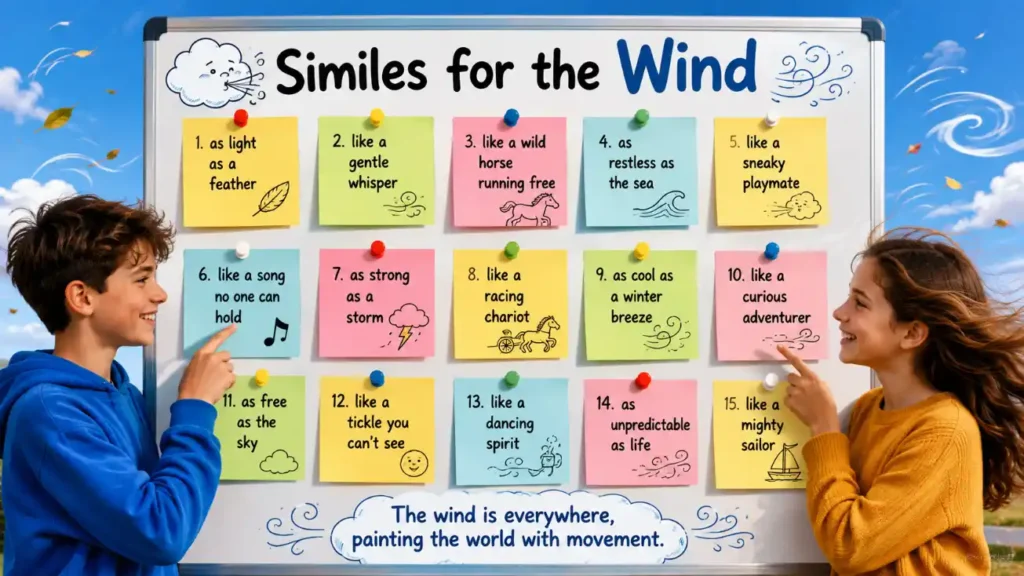
Have you ever stood outside and felt the wind rush past your face? Maybe it was soft and gentle, or perhaps it pushed against you like it had somewhere important to go. Instead of simply saying, “The wind was strong,” you can use a simile to make the scene easier to imagine.
A simile compares one thing with another by using words such as “like” or “as.” For example, you might say, “The wind was like a wild horse racing across the field.” Now, you can almost picture it.
In creative writing, similes help readers see, hear, and feel what you describe. They can turn an ordinary sentence into something colorful and memorable.
So, if you are looking for similes for the wind, you are in the right place. Let’s explore 50 creative examples with simple meanings, explanations, and simile sentences. You can use these ideas in stories, poems, school assignments, or your own creative writing.
50 Similes for the Wind
1. The wind was like a whisper through the trees.
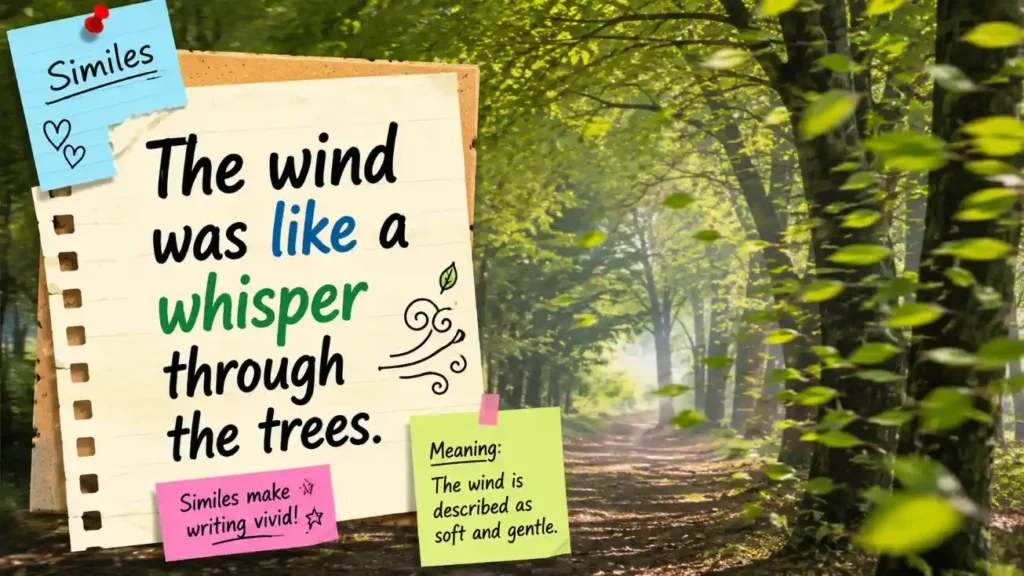
Meaning: The wind was very soft and quiet.
Explanation: This simile compares gentle wind to a quiet whisper. It creates a peaceful and calm feeling.
Examples:
- The wind was like a whisper through the trees as we walked home.
- At night, the wind sounded like a whisper outside my window.
2. The wind howled like a hungry wolf.
Meaning: The wind made a loud, frightening sound.
Explanation: A hungry wolf is often imagined as making a powerful howl. This comparison makes the wind seem wild and scary.
Examples:
- The wind howled like a hungry wolf during the storm.
- Outside, the wind howled like a hungry wolf in the darkness.
3. The wind raced like a wild horse.
Meaning: The wind moved very quickly.
Explanation: A wild horse can run freely and quickly. Comparing the wind to one shows its speed and energy.
Examples:
- The wind raced like a wild horse across the open field.
- Leaves flew away as the wind raced like a wild horse.
4. The wind was as gentle as a feather.
Meaning: The wind was extremely soft and light.
Explanation: A feather is light and delicate, so this simile creates an image of a mild breeze.
Examples:
- The evening wind was as gentle as a feather against my skin.
- A breeze touched the flowers as gently as a feather.
5. The wind blew like a rushing river.
Meaning: The wind moved strongly and continuously.
Explanation: A rushing river flows quickly and powerfully. This comparison gives the wind a strong sense of movement.
Examples:
- The wind blew like a rushing river through the valley.
- Leaves scattered as the wind blew like a rushing river.
6. The wind danced like a playful child.
Meaning: The wind moved lightly and unpredictably.
Explanation: Children often run, spin, and move without staying still. This simile makes the breeze feel lively and cheerful.
Examples:
- The wind danced like a playful child among the flowers.
- Curtains moved as the wind danced like a playful child.
7. The wind was as cold as ice.
Meaning: The wind felt extremely cold.
Explanation: Ice is a familiar symbol of coldness. This simile helps readers quickly understand how chilly the wind felt.
Examples:
- The winter wind was as cold as ice.
- His face became numb when a wind as cold as ice hit him.
8. The wind swept across the land like a giant broom.
Meaning: The wind moved across a large area and carried things along.
Explanation: A broom sweeps objects from one place to another. This comparison shows the powerful movement of the wind.
Examples:
- The wind swept across the field like a giant broom.
- Dust moved down the road as the wind swept like a giant broom.
9. The wind roared like a lion.
Meaning: The wind made a deep, powerful sound.
Explanation: Lions are known for their strength and powerful presence. This simile makes the wind seem fierce.
Examples:
- The wind roared like a lion outside the cabin.
- During the storm, the wind roared like a lion.
10. The wind moved like a dancer.
Meaning: The wind moved smoothly and gracefully.
Explanation: A dancer moves with rhythm and flow. This simile gives the breeze an elegant and artistic quality.
Examples:
- The wind moved like a dancer through the tall grass.
- Leaves swayed as the wind moved like a dancer.
11. The wind was like an invisible hand.
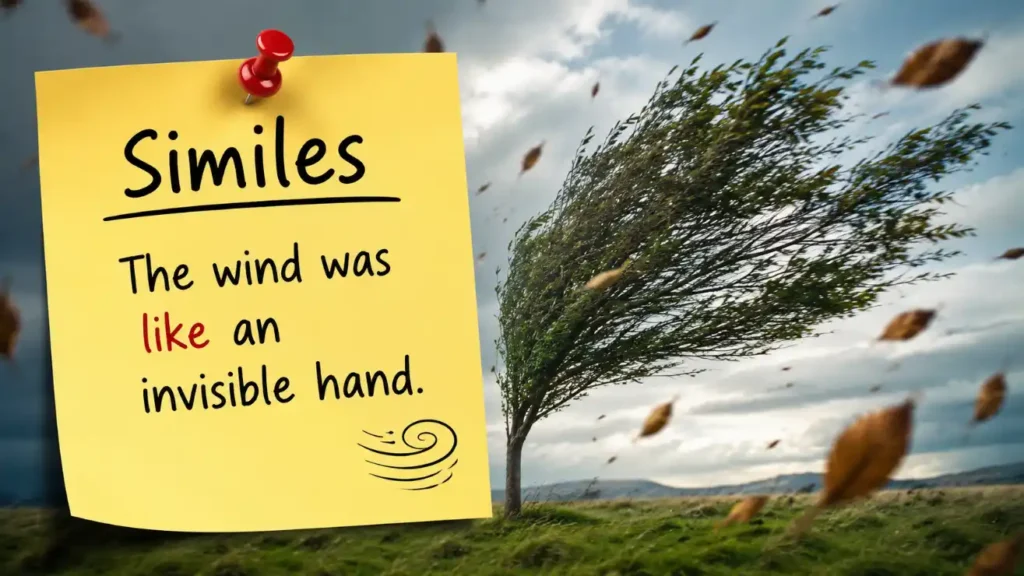
Meaning: The wind could not be seen, but its effects could be felt.
Explanation: We cannot normally see the wind itself, yet we can see what it moves. Comparing it to an invisible hand makes this idea clear.
Examples:
- The wind was like an invisible hand pushing the branches.
- An invisible wind moved the curtains like an unseen hand.
12. The breeze kissed my face like a soft cloud.
Meaning: The breeze felt gentle and pleasant.
Explanation: A soft cloud suggests something light and delicate. This comparison creates a warm, peaceful image.
Examples:
- The morning breeze kissed my face like a soft cloud.
- I smiled as the wind touched my cheeks like a soft cloud.
13. The wind rushed like a speeding train.
Meaning: The wind moved extremely fast.
Explanation: A speeding train travels quickly and creates strong movement. This simile emphasizes the wind’s speed.
Examples:
- The wind rushed like a speeding train through the town.
- We heard the wind rushing like a speeding train outside.
14. The wind was as restless as a child.
Meaning: The wind kept moving and would not become still.
Explanation: A restless child may constantly move around. The comparison makes the wind seem energetic and unpredictable.
Examples:
- The wind was as restless as a child all afternoon.
- Branches shook because the wind was as restless as a child.
15. The wind whispered like a secret friend.
Meaning: The wind made a quiet, gentle sound.
Explanation: A secret friend suggests a soft voice shared privately. This gives the wind a mysterious and comforting quality.
Examples:
- The wind whispered like a secret friend through the leaves.
- At sunset, the wind whispered like a secret friend.
16. The wind struck like a hammer.
Meaning: The wind hit with great force.
Explanation: A hammer delivers a strong blow. This simile describes powerful wind that feels forceful against the body or objects.
Examples:
- The wind struck like a hammer against the windows.
- Strong gusts struck us like a hammer as we crossed the bridge.
17. The wind curled around us like a snake.
Meaning: The wind moved around people in a twisting way.
Explanation: A snake moves by twisting and curling. This comparison gives the wind a mysterious, winding movement.
Examples:
- The cold wind curled around us like a snake.
- Wind curled around the trees like a snake in the grass.
18. The wind was as wild as a stormy sea.
Meaning: The wind was powerful and uncontrolled.
Explanation: A stormy sea is rough and unpredictable. Comparing the wind to it creates a dramatic image.
Examples:
- The wind was as wild as a stormy sea.
- That night, the wind became as wild as a stormy sea.
19. The wind flew like a bird.
Meaning: The wind moved freely and quickly.
Explanation: Birds travel freely through the air. This simile suggests freedom, speed, and light movement.
Examples:
- The wind flew like a bird across the hills.
- Cool air moved through the window like a bird in flight.
20. The wind tugged at my coat like a playful puppy.
Meaning: The wind pulled gently and repeatedly.
Explanation: A playful puppy may tug at clothing while playing. This gives the wind a fun and friendly personality.
Examples:
- The wind tugged at my coat like a playful puppy.
- As we walked, the breeze pulled my scarf like a playful puppy.
21. The wind was as sharp as a knife.

Meaning: The wind felt painfully cold or biting.
Explanation: A knife has a sharp edge. This comparison describes a cold wind that seems to cut into the skin.
Examples:
- The winter wind was as sharp as a knife.
- A wind as sharp as a knife swept across the street.
22. The wind chased the leaves like excited children.
Meaning: The wind moved leaves quickly and playfully.
Explanation: Children running after one another create a lively scene. This simile gives the wind a playful personality.
Examples:
- The wind chased the leaves like excited children.
- Across the park, the wind chased leaves like excited children.
23. The wind screamed like a frightened animal.
Meaning: The wind made a loud and disturbing sound.
Explanation: A frightened animal may make a sharp cry. This comparison makes the wind sound scary and dramatic.
Examples:
- The wind screamed like a frightened animal all night.
- Through the broken window, the wind screamed like a frightened animal.
24. The wind floated like a feather.
Meaning: The wind moved softly and lightly.
Explanation: A feather drifts gently through the air. This simile works well for a quiet and pleasant breeze.
Examples:
- The gentle wind floated like a feather across the garden.
- A cool breeze floated like a feather through the room.
25. The wind pushed against the door like an angry giant.
Meaning: The wind was very strong.
Explanation: An angry giant suggests enormous strength. This comparison makes the wind seem powerful enough to force its way inside.
Examples:
- The wind pushed against the door like an angry giant.
- All night, the wind attacked the door like an angry giant.
26. The wind sang like a bird.
Meaning: The wind made a pleasant sound.
Explanation: Birds are often associated with beautiful songs. This simile gives the breeze a musical quality.
Examples:
- The wind sang like a bird through the branches.
- In the quiet morning, the wind sang like a bird.
27. The wind moved as softly as silk.
Meaning: The wind felt smooth and gentle.
Explanation: Silk is known for being soft and smooth. This comparison creates a delicate feeling.
Examples:
- The evening breeze moved as softly as silk.
- The wind brushed my skin as softly as silk.
28. The wind raced through the trees like a thief.
Meaning: The wind moved quickly and quietly.
Explanation: A thief may move quickly and secretly. This simile makes the wind seem sneaky and mysterious.
Examples:
- The wind raced through the trees like a thief.
- Leaves disappeared as the wind moved like a thief through the forest.
29. The wind hit the house like a giant wave.
Meaning: The wind struck the house with great force.
Explanation: A giant wave can crash into something with tremendous power. This simile shows the strength of the wind.
Examples:
- The wind hit the house like a giant wave.
- During the storm, each gust felt like a giant wave.
30. The wind was as playful as a kitten.
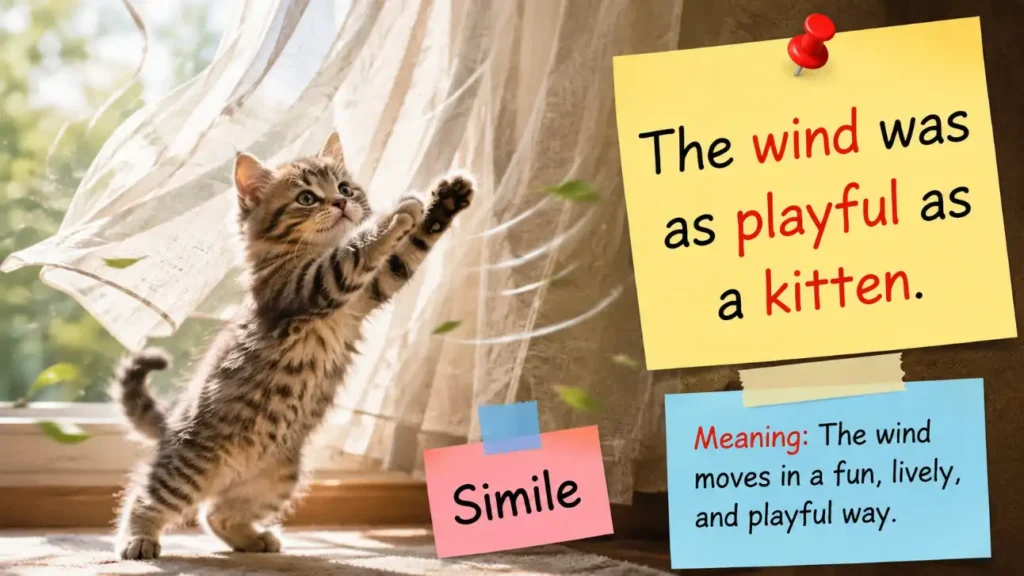
Meaning: The wind was light, gentle, and fun.
Explanation: Kittens often play by jumping and moving around. This comparison gives a soft breeze a cheerful personality.
Examples:
- The spring wind was as playful as a kitten.
- Curtains moved in the breeze as playfully as a kitten.
31. The wind swept through the valley like an army.
Meaning: The wind moved across the valley with great force.
Explanation: An army suggests power, movement, and strength. This simile makes the wind sound strong and unstoppable.
Examples:
- The wind swept through the valley like an army.
- Cold air marched through the valley like an army.
32. The wind tapped on the window like tiny fingers.
Meaning: The wind made small tapping sounds.
Explanation: Comparing the sound to tiny fingers makes the wind seem almost human.
Examples:
- The wind tapped on the window like tiny fingers.
- At midnight, the wind tapped like tiny fingers against the glass.
33. The wind was as fierce as a dragon.
Meaning: The wind was extremely strong and frightening.
Explanation: Dragons are often shown as powerful creatures. This simile gives the wind a fierce and almost magical quality.
Examples:
- The wind was as fierce as a dragon during the storm.
- A fierce wind attacked the trees like a dragon.
34. The wind wrapped around the trees like a blanket.
Meaning: The wind surrounded the trees.
Explanation: A blanket covers and surrounds something. This comparison can describe a broad, continuous breeze.
Examples:
- The cool wind wrapped around the trees like a blanket.
- Mist and wind covered the forest like a blanket.
35. The wind darted like a tiny bird.
Meaning: The wind moved quickly in short bursts.
Explanation: A tiny bird can suddenly change direction and move quickly. This simile shows fast, unpredictable gusts.
Examples:
- The wind darted like a tiny bird between the houses.
- Small gusts darted like tiny birds through the garden.
36. The wind was as soothing as a lullaby.
Meaning: The wind was calm and relaxing.
Explanation: A lullaby is a gentle song that helps people relax or sleep. This simile creates a peaceful mood.
Examples:
- The night breeze was as soothing as a lullaby.
- The wind outside sounded as soothing as a lullaby.
37. The wind tore through the forest like a wild beast.
Meaning: The wind moved violently and powerfully.
Explanation: A wild beast suggests uncontrolled strength. This comparison works well when describing a severe storm.
Examples:
- The wind tore through the forest like a wild beast.
- Branches fell as the wind moved like a wild beast.
38. The wind tickled my face like a feather.
Meaning: The wind touched the face lightly.
Explanation: A feather can create a soft, tickling sensation. This simile is ideal for a gentle breeze.
Examples:
- The cool wind tickled my face like a feather.
- A soft breeze tickled my cheeks like a feather.
39. The wind was as loud as a drum.

Meaning: The wind made a very loud sound.
Explanation: A drum can produce a strong, noticeable sound. This comparison emphasizes noisy wind.
Examples:
- The wind was as loud as a drum against the roof.
- Last night, the storm wind sounded as loud as a drum.
40. The wind carries the leaves like a river carries boats.
Meaning: The wind moved the leaves along smoothly.
Explanation: A river carries boats with its flowing water. This simile shows how naturally the wind moved the leaves.
Examples:
- The wind carries the leaves like a river carries boats.
- Across the street, leaves floated as if the wind were a river.
41. The wind was as free as a bird.
Meaning: The wind could move anywhere without limits.
Explanation: Birds can travel freely through the sky. This simile connects wind with freedom and open space.
Examples:
- The wind was as free as a bird across the open plain.
- I watched the breeze move as freely as a bird.
42. The wind knocked against the walls like a giant.
Meaning: The wind hit the walls with great strength.
Explanation: A giant suggests huge power. This comparison makes a storm feel large and threatening.
Examples:
- The wind knocked against the walls like a giant.
- All evening, the storm hit the house like a giant.
43. The wind slipped through the window like a mouse.
Meaning: The wind entered quietly and unnoticed.
Explanation: A mouse can move quietly through a small space. This simile gives the breeze a sneaky but gentle quality.
Examples:
- The cold wind slipped through the window like a mouse.
- A tiny breeze entered the room like a mouse.
44. The wind was as restless as waves.
Meaning: The wind kept moving without becoming calm.
Explanation: Waves constantly rise and fall. Comparing wind to waves shows its continuous motion.
Examples:
- The autumn wind was as restless as waves.
- Outside, the wind remained as restless as waves on the sea.
45. The wind raced across the grass like a shadow.
Meaning: The wind moved quickly and almost silently.
Explanation: A shadow can glide across a surface without making a sound. This simile creates a quiet visual image.
Examples:
- The wind raced across the grass like a shadow.
- We watched the breeze move like a shadow over the field.
46. The wind brushed the flowers like a gentle hand.
Meaning: The wind touched the flowers softly.
Explanation: A gentle hand suggests kindness and softness. This simile gives the breeze a caring quality.
Examples:
- The wind brushed the flowers like a gentle hand.
- A soft breeze touched the roses like a gentle hand.
47. The wind twisted through the streets like a dancer.
Meaning: The wind moved in a winding, graceful way.
Explanation: A dancer can turn and move smoothly in different directions. This comparison makes the wind seem graceful.
Examples:
- The wind twisted through the streets like a dancer.
- Leaves spun as the wind moved like a dancer.
48. The wind crashed through the trees like a stampede.
Meaning: The wind moved with loud and powerful force.
Explanation: A stampede involves many animals moving quickly and noisily. This simile creates an intense image of strong wind.
Examples:
- The wind crashed through the trees like a stampede.
- Branches shook as the wind rushed through like a stampede.
49. The wind was as cool as mountain air.
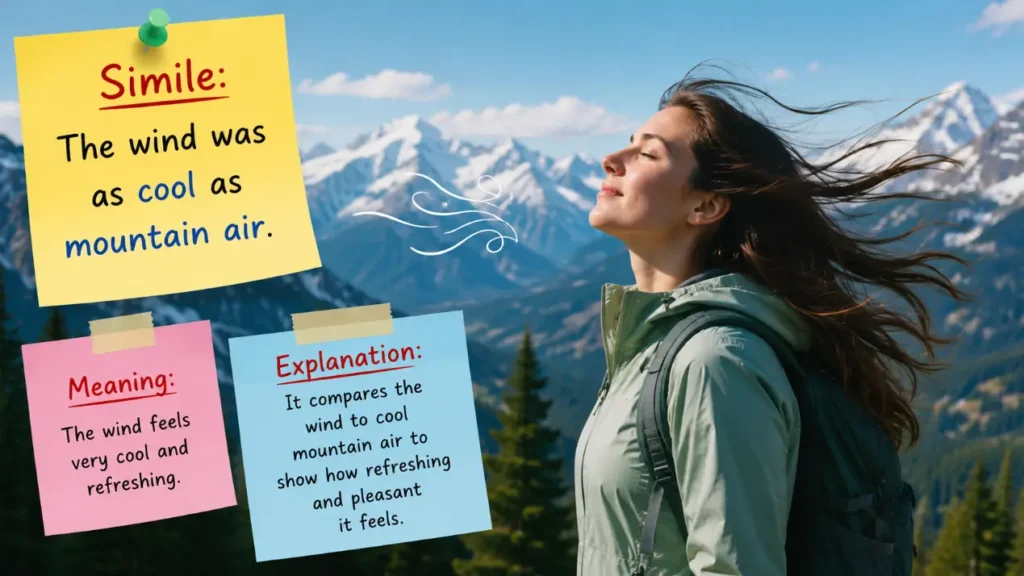
Meaning: The wind felt fresh and pleasantly cool.
Explanation: Mountain air is often associated with freshness and cool temperatures. This simile creates a refreshing image.
Examples:
- The morning wind was as cool as mountain air.
- A breeze as cool as mountain air filled the room.
50. The wind disappeared like a fading song.
Meaning: The wind slowly became quiet and stopped.
Explanation: A fading song becomes softer until it can no longer be heard. This simile describes wind that gradually dies away.
Examples:
- The wind disappeared like a fading song after the storm.
- By sunrise, the restless breeze faded like a song.
Why Use Similes for the Wind in Writing?
Wind is invisible, which can make it tricky to describe. Readers cannot directly see it, so writers often describe what the wind sounds like, feels like, or does.
For example, “The wind was strong” gives basic information. However, “The wind roared like a lion” creates a much stronger picture.
That is the real power of creative writing similes.
A good simile can help you:
- Create a clear mental picture.
- Show emotion and mood.
- Make descriptions more memorable.
- Add personality to nature.
- Make stories and poems more interesting.
- Help readers feel part of the scene.
In simple terms, a simile gives your reader something familiar to compare with something unfamiliar.
Simile vs. Metaphor
A simile compares two things using words such as like or as.
A metaphor makes a direct comparison without using “like” or “as.”
For example:
Simile: The wind was like a roaring lion.
Metaphor: The wind was a roaring lion.
Both sentences create a similar picture, but the structure is different.
Here is another example:
Simile: The wind moved like a dancer through the trees.
Metaphor: The wind was a dancer moving through the trees.
When learning how to use similes in writing, look for the comparison words like and as. They are often the easiest clues.
How to Create Your Own Similes for the Wind
Creating your own simile is easier than it may seem. Start by thinking about what the wind is doing.
Is it:
- Moving quickly?
- Making a loud noise?
- Feeling cold?
- Touching your skin?
- Moving leaves?
- Shaking trees?
- Making you feel peaceful?
- Creating fear?
Next, choose something familiar that behaves in a similar way.
For example:
Wind + fast movement = racing horse
You can then write:
The wind raced like a wild horse across the field.
Try using animals, objects, people, weather, sounds, or familiar experiences. The more specific your comparison is, the more powerful your simile sentences can become.
Practical Exercise: Test Your Simile Skills
- Complete the simile: The wind was as cold as ______.
ice.
- Which simile describes a very loud wind: “The wind whispered like a secret” or “The wind roared like a lion”?
The wind roared like a lion.
- Complete the simile: The wind raced like a ______.
wild horse.
- Which simile describes a gentle breeze: “The wind was as gentle as a feather” or “The wind struck like a hammer”?
The wind was as gentle as a feather.
- Identify the simile in this sentence: “The wind danced like a playful child.”
“The wind danced like a playful child.”
- Complete the sentence: The wind tapped on the window like ______.
tiny fingers.
- Which comparison shows that the wind is moving very quickly: “like a speeding train” or “like a soft cloud”?
Like a speeding train.
- Is this a simile or metaphor? “The wind was a wild beast.”
Metaphor.
- Turn this simple sentence into a simile: “The wind was loud.”
The wind was as loud as a drum.
- Create your own simile for a soft evening breeze.
One possible answer is: “The evening breeze was as soothing as a lullaby.” Other creative answers can also be correct.
Quick Tips for Better Simile Sentences
When writing your own examples of similes, keep the comparison clear. A reader should understand why the two things are connected.
You can also choose comparisons that match the mood of your scene.
For a peaceful scene, try words such as:
- Feather
- Whisper
- Lullaby
- Silk
- Cloud
Frightening scene, consider:
- Wolf
- Dragon
- Wild beast
- Lion
- Giant
For fast-moving wind, you might use:
- Train
- Horse
- Bird
- River
- Shadow
Most importantly, avoid forcing a comparison that does not fit. A simple, natural simile is usually more effective than a complicated one.
Conclusion
Similes make ordinary descriptions much more vivid. Instead of simply saying that the wind is cold, loud, fast, or gentle, you can compare it to something your reader already knows.
A phrase such as “the wind howled like a hungry wolf” immediately creates a stronger image. Likewise, “the breeze was as gentle as a feather” gives a peaceful feeling in just a few words.
As you practice, think about what the wind is doing and find something familiar that behaves in the same way. Then connect the two with like or as.
If you are writing a poem, story, school assignment, or creative description, these similes for the wind can help your words come alive. Now it is your turn create a few original similes and see where your imagination takes you!

I am Jerry Spinelli’s inspiring children’s stories encourage creativity, individuality, and confidence, while Publivexa.com supports students with similes, vocabulary, writing ideas, and English learning resources.