
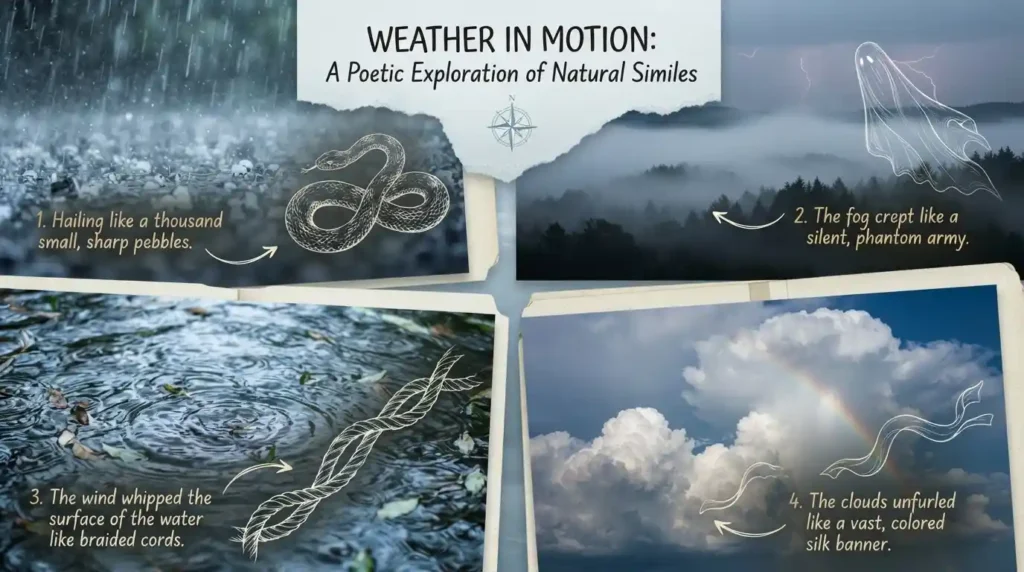
Have you ever looked outside and thought, “The wind is wild today”? That tells us what the weather is like, but a simile can make the scene much more vivid. A simile compares two different things using words such as “like” or “as.” For example, you might say, “The clouds were like giant ships sailing across the sky.”
In simple terms, similes help readers see, feel, and imagine the weather instead of simply reading about it. They can make a sunny morning feel warmer, a storm seem more powerful, or a cold day feel even sharper.
If you are working on creative writing, poems, stories, or school assignments, weather similes are an easy way to add color to your words. So, let’s explore 50 similes for weather, with simple meanings, explanations, and examples you can use in your own writing.
50 Similes for Weather
1. The Sun Was Like a Golden Ball
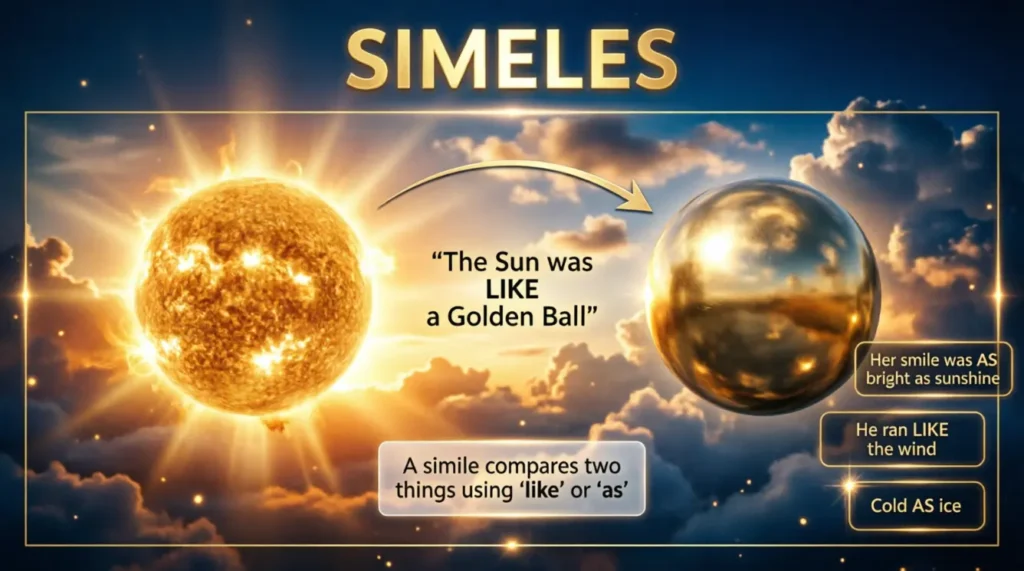
Meaning: The sun looked bright, round, and golden.
Explanation: This simile creates a simple picture of a warm, glowing sun in the sky.
Examples:
The sun was like a golden ball above the quiet town.
At noon, the sun looked like a golden ball floating in the blue sky.
2. The Sky Was as Blue as the Ocean
Meaning: The sky was very blue and clear.
Explanation: Comparing the sky to the ocean helps readers imagine a deep, bright blue color.
Examples:
The sky was as blue as the ocean after the storm.
We walked outside beneath a sky as blue as the ocean.
3. The Clouds Were Like Soft Pillows
Meaning: The clouds looked soft, fluffy, and comfortable.
Explanation: This comparison gives the clouds a gentle and peaceful feeling.
Examples:
The clouds were like soft pillows drifting overhead.
She watched clouds like soft pillows move across the afternoon sky.
4. The Rain Fell Like Silver Threads
Meaning: The rain looked like many thin, shining lines.
Explanation: This simile creates a delicate picture of rain falling from the clouds.
Examples:
Rain fell like silver threads outside the window.
The morning rain looked like silver threads in the sunlight.
5. The Wind Was Like a Wild Horse
Meaning: The wind was strong, fast, and difficult to control.
Explanation: A wild horse suggests powerful movement and energy.
Examples:
The wind was like a wild horse racing through the trees.
All night, the wind moved like a wild horse across the fields.
6. The Storm Was Like a Giant Roaring Beast
Meaning: The storm was loud, powerful, and frightening.
Explanation: Comparing the storm to a beast makes its strength feel dramatic.
Examples:
The storm sounded like a giant roaring beast.
Outside, the storm moved like a giant roaring beast.
7. The Thunder Was Like a Drum
Meaning: The thunder made a loud, booming sound.
Explanation: A drum helps readers imagine the deep noise of thunder.
Examples:
Thunder sounded like a giant drum above the house.
The thunder rolled like a drum across the dark sky.
8. Lightning Was Like a Flashing Sword
Meaning: Lightning appeared bright, sharp, and sudden.
Explanation: A flashing sword gives lightning a striking and powerful image.
Examples:
Lightning cut across the sky like a flashing sword.
A bolt of lightning appeared like a flashing sword in the clouds.
9. The Snow Was Like a White Blanket
Meaning: Snow covered the ground completely.
Explanation: This simile shows how snow can spread smoothly across everything.
Examples:
Snow covered the garden like a white blanket.
By morning, the streets looked like they were wrapped in a white blanket.
10. The Morning Was as Fresh as a New Leaf
Meaning: The morning felt clean, fresh, and pleasant.
Explanation: A new leaf suggests freshness and new beginnings.
Examples:
The cool morning felt as fresh as a new leaf.
After the rain, the air was as fresh as a new leaf.
11. The Fog Was Like a Gray Curtain
Meaning: Fog covered the view and made everything difficult to see.
Explanation: A curtain blocks what is behind it, just as thick fog can hide the landscape.
Examples:
The fog was like a gray curtain over the road.
A gray fog hung like a curtain between the houses.
12. The Heat Was Like an Oven

Meaning: The weather was extremely hot.
Explanation: An oven is very hot, so this comparison makes the temperature easy to imagine.
Examples:
The afternoon felt like an oven.
Walking outside was like stepping into an oven.
13. The Cold Was Like an Icy Hand
Meaning: The cold felt sharp and uncomfortable.
Explanation: An icy hand suggests something cold touching your skin.
Examples:
The winter wind felt like an icy hand on my face.
The cold wrapped around us like an icy hand.
14. The Breeze Was Like a Gentle Whisper
Meaning: The breeze was soft and quiet.
Explanation: A whisper is gentle, making it a good comparison for a light breeze.
Examples:
The evening breeze was like a gentle whisper.
Leaves moved as the breeze passed like a gentle whisper.
15. The Rain Was Like Tiny Diamonds
Meaning: Raindrops looked bright and sparkling.
Explanation: Diamonds suggest something small, clear, and shiny.
Examples:
Raindrops sparkled like tiny diamonds on the grass.
The morning rain looked like tiny diamonds in the sunlight.
16. The Clouds Were as Dark as Ink
Meaning: The clouds were extremely dark.
Explanation: Ink is deep and dark, so it creates a strong image of storm clouds.
Examples:
The clouds were as dark as ink before the storm.
Above us, clouds gathered as dark as ink.
17. The Sunlight Was Like Warm Honey
Meaning: The sunlight felt soft, golden, and warm.
Explanation: Honey suggests a rich golden color and gentle warmth.
Examples:
Sunlight spread across the room like warm honey.
The evening light was like warm honey on the walls.
18. The Wind Howled Like a Wolf
Meaning: The wind made a loud, eerie sound.
Explanation: A wolf’s howl gives the wind a wild and haunting quality.
Examples:
The wind howled like a wolf outside.
At midnight, the wind sounded like a wolf in the distance.
19. The Rain Poured Like a Waterfall
Meaning: The rain was falling very heavily.
Explanation: A waterfall has a large amount of water rushing downward, making this a strong comparison.
Examples:
Rain poured like a waterfall from the dark clouds.
The storm sent rain down like a waterfall.
20. The Sky Was Like a Painted Picture
Meaning: The sky looked beautiful and colorful.
Explanation: A painted picture suggests an artistic and eye-catching scene.
Examples:
The sunset made the sky look like a painted picture.
After the rain, the sky was like a painted picture.
21. The Sunset Was Like a Burning Fire
Meaning: The sunset was bright, red, orange, or golden.
Explanation: Fire creates a vivid image of warm and glowing colors.
Examples:
The sunset looked like a burning fire behind the hills.
The western sky glowed like a burning fire.
22. The Sunrise Was Like a Golden Door
Meaning: The sunrise seemed to open into a bright new day.
Explanation: A golden door suggests beauty, hope, and a new beginning.
Examples:
The sunrise appeared like a golden door in the distance.
Morning opened like a golden door over the quiet town.
23. The Hail Fell Like Little Stones
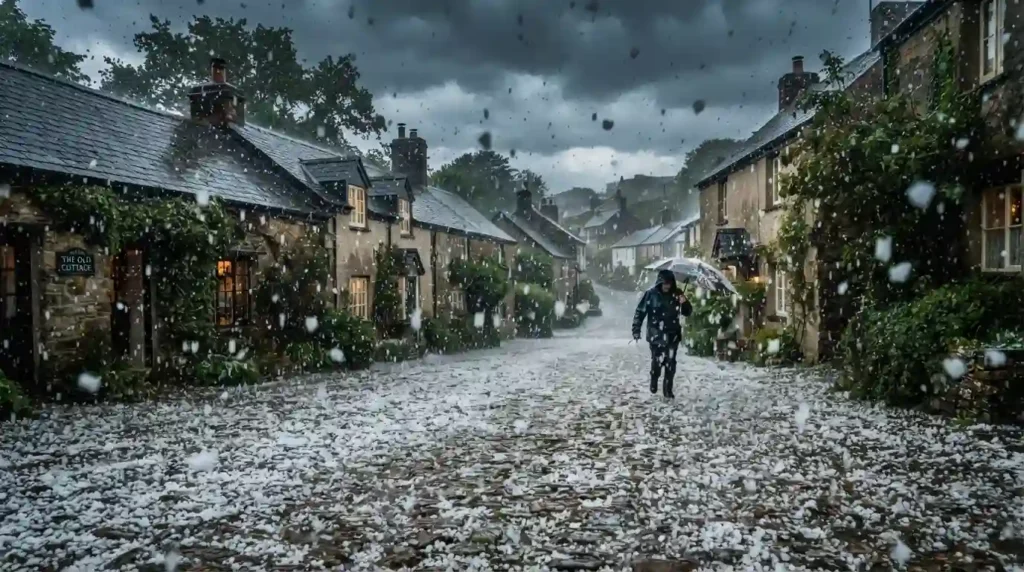
Meaning: Hail fell hard and looked like small stones.
Explanation: This comparison helps readers picture the size and hard texture of hail.
Examples:
Hail fell like little stones onto the roof.
The children watched hail bounce like little stones across the yard.
24. The Drizzle Was Like a Soft Shower
Meaning: A light rain was falling gently.
Explanation: A soft shower suggests mild, steady rain rather than a heavy storm.
Examples:
The drizzle felt like a soft shower on my face.
A gentle drizzle fell like a soft shower.
25. The Summer Air Was Like a Warm Hug
Meaning: The air felt warm and comforting.
Explanation: A warm hug represents comfort and pleasant warmth.
Examples:
The summer air felt like a warm hug.
Outside, the warm breeze was like a hug from the sun.
26. The Winter Wind Was as Sharp as a Knife
Meaning: The wind felt extremely cold and biting.
Explanation: A knife suggests something sharp, helping describe the painful feeling of freezing wind.
Examples:
The winter wind was as sharp as a knife.
The cold air felt as sharp as a knife against my cheeks.
27. The Clouds Moved Like Ships
Meaning: The clouds slowly traveled across the sky.
Explanation: Ships moving across the ocean create a peaceful image of drifting clouds.
Examples:
The clouds moved like ships across the blue sky.
White clouds floated like ships toward the horizon.
28. The Rain Clouds Were Like Giants
Meaning: The storm clouds looked large and powerful.
Explanation: Giants suggest something huge and impressive.
Examples:
The rain clouds were like giants gathering above the city.
Dark clouds stood like giants over the hills.
29. The Fog Wrapped Around the Trees Like a Blanket
Meaning: Fog covered the trees closely.
Explanation: A blanket suggests something that surrounds and hides an object.
Examples:
Fog wrapped around the trees like a blanket.
The forest disappeared beneath fog like a blanket.
30. The Moon Was Like a Silver Lamp
Meaning: The moon gave a soft, silvery light at night.
Explanation: A lamp provides light, making it a natural comparison for the moon.
Examples:
The moon hung like a silver lamp above the rooftops.
At night, the moon shone like a silver lamp.
31. The Stars Were Like Tiny Sparks
Meaning: The stars looked small and bright.
Explanation: Sparks create an image of tiny points of glowing light.
Examples:
The stars were like tiny sparks in the dark sky.
Above the desert, stars glittered like tiny sparks.
32. The Night Sky Was Like a Dark Blanket
Meaning: The night sky covered everything in darkness.
Explanation: A blanket can cover and surround something, just like darkness covers the landscape.
Examples:
The night sky was like a dark blanket over the town.
Darkness spread like a blanket across the fields.
33. The Rainbow Was Like a Colorful Bridge
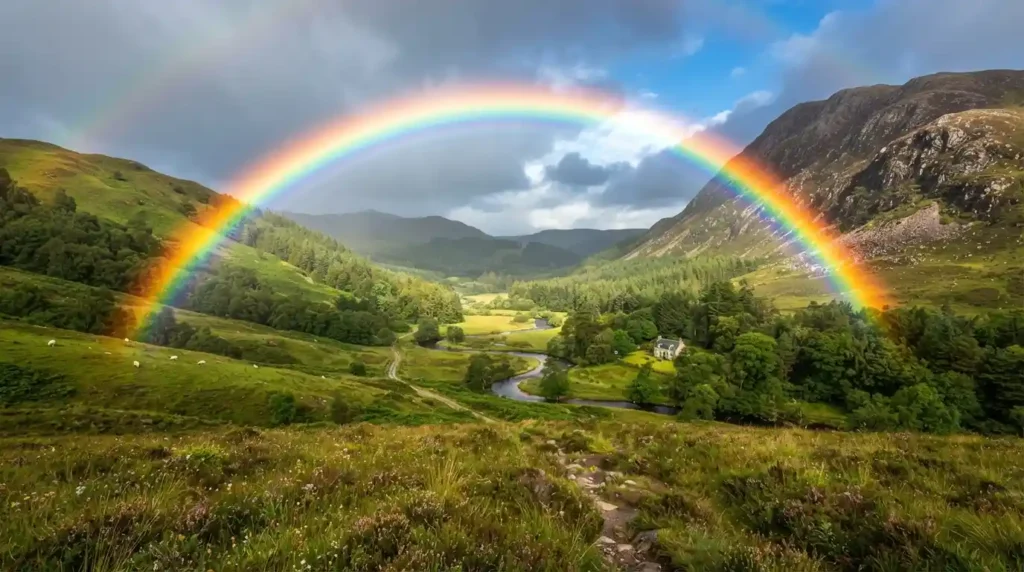
Meaning: The rainbow formed a curved, colorful shape across the sky.
Explanation: A bridge creates a clear picture of something stretching from one side to another.
Examples:
The rainbow looked like a colorful bridge across the clouds.
After the storm, a rainbow appeared like a colorful bridge.
34. The Thunderstorm Was Like a Giant Concert
Meaning: The storm was filled with loud sounds.
Explanation: A concert can be loud and dramatic, much like thunder during a storm.
Examples:
The thunderstorm was like a giant concert in the sky.
Thunder and rain sounded like a giant concert.
35. The Breeze Was as Cool as Ice
Meaning: The breeze felt very cold and refreshing.
Explanation: Ice gives readers a simple image of intense coolness.
Examples:
The mountain breeze was as cool as ice.
A breeze as cool as ice swept through the open window.
36. The Summer Sun Was Like a Fireball
Meaning: The sun felt extremely hot and bright.
Explanation: A fireball suggests intense heat and glowing light.
Examples:
The summer sun hung like a fireball overhead.
By afternoon, the sun felt like a fireball.
37. The Rain Was Like a Gentle Tap
Meaning: The rain fell softly.
Explanation: A gentle tap creates the feeling of light raindrops touching a surface.
Examples:
The rain sounded like a gentle tap on the window.
Drops fell like a gentle tap against the roof.
38. The Storm Clouds Were as Heavy as Mountains
Meaning: The clouds looked huge, thick, and dark.
Explanation: Mountains suggest enormous size and weight.
Examples:
Storm clouds looked as heavy as mountains above us.
The sky filled with clouds as heavy as mountains.
39. The Wind Danced Like a Child
Meaning: The wind moved freely and playfully.
Explanation: A child dancing creates a cheerful image of energetic movement.
Examples:
The wind danced like a child through the tall grass.
Leaves shook as the wind danced like a child.
40. The Rain Sang Like a Bird
Meaning: The rain made a soft, pleasant sound.
Explanation: A singing bird suggests a light and peaceful sound.
Examples:
The rain sang like a bird against the window.
Outside, the gentle rain sounded like a bird singing.
41. The Snowflakes Fell Like Feathers
Meaning: Snowflakes fell gently and slowly.
Explanation: Feathers are light, soft, and able to float through the air.
Examples:
Snowflakes fell like feathers from the gray sky.
The first snow drifted down like feathers.
42. The Morning Mist Was Like a Ghost
Meaning: The mist looked pale, mysterious, and difficult to see through.
Explanation: A ghost creates a mysterious image of something appearing softly in the distance.
Examples:
Morning mist moved like a ghost through the valley.
The fog appeared like a ghost between the trees.
43. The Air Was as Fresh as Rain
Meaning: The air felt clean and refreshing.
Explanation: Rain often makes the air feel cool and fresh.
Examples:
The morning air was as fresh as rain.
After the storm, the air felt as fresh as rain.
44. The Sky Glowed Like a Lantern
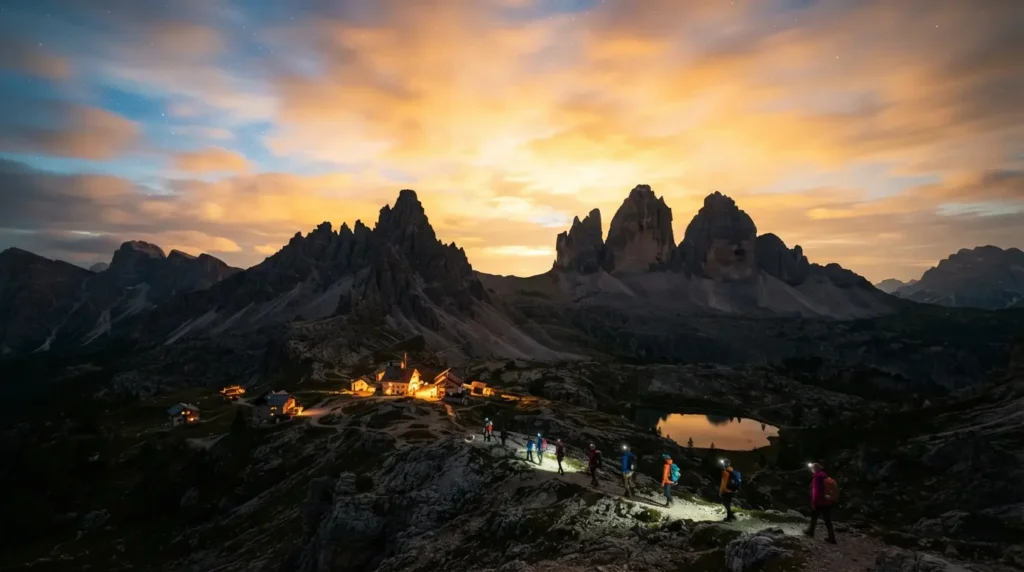
Meaning: The sky was bright with warm light.
Explanation: A lantern gives off a warm glow, making it useful for describing sunrise or sunset.
Examples:
The evening sky glowed like a lantern.
At sunset, the horizon shone like a lantern.
45. The Storm Came Like a Thief
Meaning: The storm arrived suddenly and unexpectedly.
Explanation: A thief appears quietly or unexpectedly, creating a sense of surprise.
Examples:
The storm came like a thief in the night.
Rain arrived like a thief before anyone could prepare.
46. The Sun Disappeared Like a Coin
Meaning: The sun seemed to vanish quickly behind clouds.
Explanation: A coin can disappear from view quickly, making this a playful comparison.
Examples:
The sun disappeared like a coin behind the clouds.
Dark clouds arrived, and the sun vanished like a coin.
47. The Cold Air Bit Like a Dog
Meaning: The cold felt sharp and uncomfortable.
Explanation: A dog’s bite suggests a sudden, painful sensation.
Examples:
The cold air bit like a dog against my cheeks.
Outside, the freezing wind bit like a dog.
48. The Clouds Were as White as Cotton
Meaning: The clouds were bright white and fluffy.
Explanation: Cotton is soft, light, and white, making it an easy comparison for clouds.
Examples:
The clouds were as white as cotton.
Soft clouds floated overhead, as white as cotton.
49. The Rain Was Like a Curtain
Meaning: Heavy rain blocked the view.
Explanation: A curtain can hide what is behind it, just as heavy rain can make the landscape difficult to see.
Examples:
The rain fell like a curtain between us and the hills.
A curtain of rain covered the distant buildings.
50. The Weather Changed Like a Mood
Meaning: The weather changed quickly and unpredictably.
Explanation: People’s moods can shift, so this simile gives changing weather a human quality.
Examples:
The weather changed like a mood throughout the afternoon.
One minute it was sunny, and the next it was stormy, changing like a mood.
Simile vs. Metaphor
Similes and metaphors both make writing more vivid, but they work in different ways.
A simile directly compares two things using “like” or “as.”
Example:
The clouds were like soft pillows.
A metaphor makes the comparison directly without using “like” or “as.”
Example:
The clouds were soft pillows floating across the sky.
In simple terms, if you say “The wind is like a wild horse,” you are using a simile. If you say “The wind is a wild horse,” you are using a metaphor.
Both forms can improve creative writing. However, knowing the difference helps you choose the right style for your simile sentences.
How to Use Weather Similes in Writing
Weather similes can make ordinary descriptions more interesting. Instead of writing, “It was very cold,” you might say, “The air was as sharp as a knife.”
You can also create your own examples of similes by thinking about what the weather reminds you of.
Try these simple steps:
- Choose the weather you want to describe.
- Think about its color, sound, movement, or feeling.
- Find something that has a similar quality.
- Connect the two ideas with like or as.
- Read your sentence aloud and see if it creates a clear picture.
For example:
Weather: Heavy rain
Quality: Fast and powerful
Comparison: Waterfall
Simile: “The rain poured like a waterfall.”
That is an easy way to understand the meaning of similes and learn how to use similes in writing.
FAQs
What are 10 words that describe weather?
Sunny, rainy, cloudy, windy, stormy, snowy, foggy, humid, chilly, and hot are common words used to describe weather.
What are 5 examples of similes?
Examples include “as busy as a bee,” “as cold as ice,” “like a shining star,” “as brave as a lion,” and “like a gentle breeze.”
What is a simile for rain?
“Rain fell like silver threads from the sky” is a simile. It compares falling rain to thin, shining threads using “like.”
What are some metaphors for weather?
“Winter is a sleeping giant,” “the sun is a golden ball,” and “the storm is an angry beast” are examples of weather metaphors.
Can you give me 20 words related to weather?
Weather-related words include sunshine, rain, clouds, wind, snow, storm, thunder, lightning, fog, frost, hail, drizzle, heat, cold, humidity, breeze, tornado, hurricane, rainbow, and temperature.
What are 100 weather expressions in English?
Common expressions include “under the weather,” “raining cats and dogs,” “come rain or shine,” “a breath of fresh air,” and “storm in a teacup.” Many others describe sunshine, rain, wind, storms, and changing conditions.
Can you give me 100 similes?
Yes. Similes can compare people, objects, feelings, nature, and actions using words such as “like” or “as.” For example, “as bright as the sun” and “like a gentle breeze.”
Is “I slept like a baby” a simile or metaphor?
“I slept like a baby” is a simile because it directly compares the way someone slept to the way a baby sleeps using the word “like.”
Can you give me 20 similes?
Sure. Examples include “as cold as ice,” “as fast as lightning,” “like a roaring lion,” “as soft as silk,” and “like a summer breeze.”
Conclusion
Weather is all around us, but simple descriptions do not always capture how it looks or feels. Similes for weather give your writing more life by connecting familiar weather scenes to things readers already understand. A storm can become a roaring beast, snow can fall like feathers, and sunlight can glow like warm honey.
The key is to notice the details around you. Think about the color, sound, movement, temperature, and feeling of the weather. Then find something that shares that quality. With practice, creating simile sentences becomes much easier.
So, the next time you look outside, try writing one creative comparison. You might be surprised by how one small simile can turn an ordinary weather description into a memorable image.

I am Katherine Applegate inspires young readers through imaginative stories about animals, friendship, courage, and resilience. I explore creative similes, vocabulary, and student-friendly English resources at Publivexa.com.