
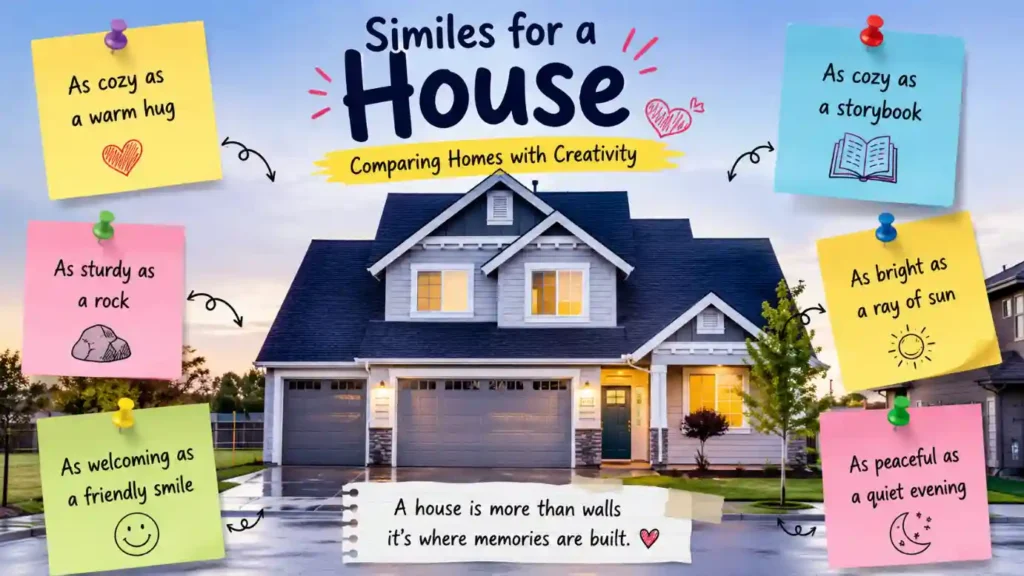
A house is more than walls, doors, and windows. It can feel warm, quiet, lonely, cheerful, old, or full of life. That is why writers often use similes for a house to help readers picture a place and feel its mood.
A simile compares one thing with another by using words such as like or as. For example, you might say, “The house was as warm as a hug.” The house is not really a hug, of course. However, the comparison helps us imagine a home that feels safe and comforting.
In simple terms, a good simile turns an ordinary description into a picture in the reader’s mind. For example, instead of saying, “The house was old,” you could say, “The house stood like an old storyteller at the end of the road.”
These creative writing similes can make stories, poems, essays, and descriptions much more interesting. So, let’s explore 50 examples of similes for a house, their meanings, and simple simile sentences you can use as inspiration.
What Is a Simile for a House?
A simile for a house is a comparison that describes a house by connecting it to something familiar. It usually uses like or as.
For example:
- The house was like a castle on a hill.
- The windows were as bright as stars.
- The little cottage looked like a cozy nest.
- The empty house stood as silent as a tomb.
- The old home creaked like an ancient ship.
These examples make the reader see more than just a building. They create a feeling, image, or mood.
50 Similes for a House
Here are 50 creative and easy-to-understand similes. Each one includes its meaning, explanation, and two example sentences.
1. The house was like a castle.
Meaning: The house looked large, grand, or impressive.
Explanation: This comparison makes an ordinary house seem magnificent and powerful. You might use it for a large home, a mansion, or a building that looks special.
Example :
The house stood on the hill like a castle.
From the garden, their huge home looked like a castle.
2. The house was as warm as a hug.
Meaning: The house felt comfortable, safe, and welcoming.
Explanation: This simile connects the warmth of a home with the comfort of a hug. It works well when describing a loving family home.
Example :
After the cold walk, the house felt as warm as a hug.
Her grandmother’s home was as warm as a hug on a winter night.
3. The house stood like a giant in the village.
Meaning: The house was very large or noticeable.
Explanation: Comparing the house to a giant helps readers imagine its size and strong presence.
Example :
The new house stood like a giant among the tiny cottages.
At the edge of town, the building stood like a giant.
4. The house was as quiet as a sleeping baby.
Meaning: The house was extremely quiet.
Explanation: A sleeping baby is often peaceful and still. This comparison creates a soft and calm mood.
Example :
At midnight, the house was as quiet as a sleeping baby.
The empty home felt as quiet as a sleeping baby.
5. The cottage looked like a little storybook home.
Meaning: The cottage looked charming, magical, or beautiful.
Explanation: This simile gives the home a fairy-tale feeling. It is useful for cottages with flowers, gardens, or unusual designs.
Example :
The cottage looked like a little storybook home.
Covered in flowers, the cottage looked like a little storybook home.
6. The house was as bright as the morning sun.
Meaning: The house was full of light.
Explanation: This comparison helps readers imagine a cheerful home filled with sunshine.
Example :
The kitchen was as bright as the morning sun.
With its large windows, the house was as bright as the morning sun.
7. The old house creaked like an old ship.
Meaning: The house made old, loud, or unusual sounds.
Explanation: Old wooden ships often creak. Comparing a house to one creates an old-fashioned or mysterious mood.
Example :
The old house creaked like an old ship during the storm.
Every floorboard groaned like an old ship.
8. The house was like a cozy nest.
Meaning: The house felt safe, comfortable, and peaceful.
Explanation: A nest is a safe place where birds rest and care for their young. This comparison gives a home a protective feeling.
Example :
Their small apartment felt like a cozy nest.
After a long day, my room felt like a cozy nest.
9. The mansion was as grand as a palace.
Meaning: The mansion was extremely impressive and luxurious.
Explanation: A palace is connected with wealth and beauty, so this simile makes the house sound magnificent.
Example :
The mansion was as grand as a palace.
With its tall gates and huge garden, the home was as grand as a palace.
10. The house stood like a lighthouse.
Meaning: The house was easy to see or seemed to guide people.
Explanation: A lighthouse stands out and helps people find their way. This simile can describe a house that is bright, tall, or easy to notice.
Example :
The white house stood like a lighthouse beside the dark road.
At night, the glowing home stood like a lighthouse.
Similes for a Beautiful House
11. The house was as beautiful as a painting.
Meaning: The house looked extremely beautiful.
Explanation: A painting can capture beauty in a special way. This simile suggests that the house looked almost too beautiful to be real.
Example :
The garden made the house as beautiful as a painting.
At sunset, the house looked as beautiful as a painting.
12. The house sparkled like a jewel.
Meaning: The house looked bright, attractive, and precious.
Explanation: A jewel catches light and attracts attention. This comparison makes the home seem special and valuable.
Example :
The clean windows made the house sparkle like a jewel.
Under the evening lights, the house sparkled like a jewel.
13. The white house looked like a pearl.
Meaning: The house looked clean, bright, and elegant.
Explanation: A pearl is smooth, bright, and beautiful. This simile works especially well for a white or light-colored home.
Example :
The white house looked like a pearl against the green trees.
In the morning light, the cottage looked like a pearl.
14. The house was as pretty as a flower.
Meaning: The house looked charming and attractive.
Explanation: Flowers are often linked with beauty and freshness. This makes the house sound cheerful and lovely.
Example :
The little house was as pretty as a flower.
With colorful plants around it, the home was as pretty as a flower.
15. The house looked like a dream.
Meaning: The house looked unusually beautiful or perfect.
Explanation: Calling a house a dream suggests that it looks almost unreal or exactly what someone wished for.
Example :
The house beside the lake looked like a dream.
With its wide porch and garden, the home looked like a dream.
16. The house was as charming as a fairy-tale cottage.
Meaning: The house looked magical and delightful.
Explanation: Fairy tales often include beautiful little cottages. This comparison gives the home a magical quality.
Example :
The tiny house was as charming as a fairy-tale cottage.
Its blue door made the home as charming as a fairy-tale cottage.
17. The house shone like a star.
Meaning: The house was very bright or noticeable.
Explanation: Stars shine brightly in the night sky. This simile makes the house stand out from its surroundings.
Example :
The house shone like a star in the dark street.
With every window glowing, the home shone like a star.
18. The house looked as fresh as spring.
Meaning: The house looked clean, bright, and lively.
Explanation: Spring is associated with new growth and freshness. This makes the house seem cheerful and renewed.
Example :
After the renovation, the house looked as fresh as spring.
The colorful paint made the home look as fresh as spring.
19. The house was like a hidden treasure.
Meaning: The house was beautiful or special but difficult to find.
Explanation: A hidden treasure is something valuable that remains unnoticed. This simile works well for secret or remote homes.
Example :
The cottage in the forest was like a hidden treasure.
Behind the tall trees, the old home was like a hidden treasure.
20. The house looked like a picture-perfect postcard.
Meaning: The house looked extremely attractive and neat.
Explanation: A postcard often shows an ideal or beautiful scene. This simile helps readers picture a home that looks perfect.
Example :
The seaside house looked like a picture-perfect postcard.
With flowers around the door, the home looked like a picture-perfect postcard.
Similes for an Old House
21. The old house was like a forgotten story.
Meaning: The house seemed old and full of memories.
Explanation: A forgotten story suggests a past that people no longer remember. This creates a mysterious and emotional mood.
Example :
The abandoned house was like a forgotten story.
Every room in the old home felt like a forgotten story.
22. The house was as old as the hills.
Meaning: The house seemed extremely old.
Explanation: Hills have existed for a very long time. This familiar comparison makes the house seem ancient.
Example :
The wooden house was as old as the hills.
Everyone in town said the building was as old as the hills.
23. The house looked like an old skeleton.
Meaning: The house was damaged, empty, or falling apart.
Explanation: A skeleton has only its basic structure. This comparison suggests that the house has lost its former beauty.
Example :
The abandoned house looked like an old skeleton.
After the fire, the building stood like an old skeleton.
24. The old home groaned like a tired giant.
Meaning: The house made deep, slow sounds.
Explanation: A tired giant suggests something huge, old, and worn out. This simile gives the house a living quality.
Example :
During the storm, the old home groaned like a tired giant.
The wooden walls groaned like a tired giant in the wind.
25. The house was as worn as an old shoe.
Meaning: The house looked used, damaged, or neglected.
Explanation: An old shoe becomes worn after years of use. This comparison gives a clear image of an aging home.
Example :
The farmhouse was as worn as an old shoe.
After decades of use, the house looked as worn as an old shoe.
26. The house leaned like a tired old man.
Meaning: The house was crooked or weak.
Explanation: A tired person may bend or lean. This comparison makes a damaged house seem almost alive.
Example :
The wooden house leaned like a tired old man.
Near the empty field, the building leaned like a tired old man.
27. The house was like a time capsule.
Meaning: The house preserved things from the past.
Explanation: A time capsule keeps objects from another period. This simile is useful for homes filled with old furniture, photos, or memories.
Example :
Grandpa’s house was like a time capsule.
The old kitchen felt like a time capsule from another age.
28. The windows were as dusty as forgotten books.
Meaning: The windows were very dirty and had not been cleaned for a long time.
Explanation: Forgotten books collect dust. This comparison gives the reader a strong image of neglect.
Example :
The windows were as dusty as forgotten books.
Inside the abandoned home, the glass was as dusty as forgotten books.
29. The roof sagged like a tired hat.
Meaning: The roof was old, weak, or bent.
Explanation: A tired hat may lose its shape. This comparison makes a damaged roof easy to picture.
Example :
The roof sagged like a tired hat after years of rain.
The old barn looked as if its roof sagged like a tired hat.
30. The house stood like a ghost from the past.
Meaning: The house reminded people of an earlier time.
Explanation: A ghost from the past suggests memories that still remain. This creates a mysterious and slightly emotional mood.
Example :
The abandoned mansion stood like a ghost from the past.
Among the modern buildings, the old house stood like a ghost from the past.
Similes for a Small or Cozy House
31. The little house was like a warm cup of tea.
Meaning: The house felt comforting and relaxing.
Explanation: A warm cup of tea can make people feel calm and comfortable. This gives the home a peaceful feeling.
Example :
After the long trip, the little house felt like a warm cup of tea.
Her cottage was like a warm cup of tea on a cold evening.
32. The house was as cozy as a blanket.
Meaning: The house felt warm, safe, and comfortable.
Explanation: A soft blanket gives comfort and warmth. This simile makes a home feel inviting.
Example :
The small living room was as cozy as a blanket.
During winter, the whole house felt as cozy as a blanket.
33. The cottage was like a bird’s nest.
Meaning: The cottage was small, safe, and comfortable.
Explanation: A bird’s nest is a protected little home. This comparison works well for tiny cottages.
Example :
The cottage in the woods was like a bird’s nest.
Tucked between the trees, the little house looked like a bird’s nest.
34. The home was as snug as a little box.
Meaning: The home was small but comfortable.
Explanation: This comparison shows that a small space can still feel pleasant and safe.
Example :
Their tiny home was as snug as a little box.
The cabin was as snug as a little box during the storm.
35. The house hugged the hill like a blanket.
Meaning: The house fits closely against the hill.
Explanation: A blanket covers and wraps around something. This gives the home a peaceful connection with its surroundings.
Example :
The cottage hugged the hill like a blanket.
The small houses hugged the hillside like a blanket.
36. The little home was like a safe harbor.
Meaning: The home provided safety and comfort.
Explanation: A harbor protects boats from rough water. In the same way, a safe home can protect people from stress and trouble.
Example :
After a difficult day, her home felt like a safe harbor.
For the children, their house was like a safe harbor.
37. The house was as peaceful as a quiet lake.
Meaning: The house was very calm and relaxing.
Explanation: A quiet lake creates an image of stillness. This simile gives the home a gentle and peaceful mood.
Example :
Their country home was as peaceful as a quiet lake.
Early in the morning, the house was as peaceful as a quiet lake.
38. The home felt like a warm blanket on a cold day.
Meaning: The home felt comforting and protective.
Explanation: A warm blanket helps people feel safe from the cold. This comparison focuses on emotional comfort.
Example :
Coming home after school felt like a warm blanket on a cold day.
Her family’s house felt like a warm blanket on a cold day.
39. The cottage was as sweet as a sugar cube.
Meaning: The cottage looked small, cute, and charming.
Explanation: A sugar cube is small and neat. This playful simile works well for a tiny, attractive cottage.
Example :
The cottage was as sweet as a sugar cube.
With its tiny windows, the home was as sweet as a sugar cube.
40. The house was like a little pocket of peace.
Meaning: The house was a calm place away from noise and trouble.
Explanation: A pocket is a small space that holds something. This comparison suggests that the home holds peace inside it.
Example :
Their cabin was like a little pocket of peace.
Away from the busy city, the house felt like a little pocket of peace.
Similes for a Scary, Empty, or Lonely House
41. The abandoned house was as silent as a tomb.
Meaning: The house was extremely quiet and lifeless.
Explanation: A tomb is a place associated with silence and death. This simile creates a dark and spooky mood.
Example :
The abandoned house was as silent as a tomb.
At midnight, the empty building was as silent as a tomb.
42. The house looked like a haunted castle.
Meaning: The house looked frightening, old, or mysterious.
Explanation: A haunted castle is a common image in scary stories. This comparison immediately creates suspense.
Example :
The mansion looked like a haunted castle under the full moon.
The broken windows made the house look like a haunted castle.
43. The house stood like a shadow.
Meaning: The house looked dark, quiet, or mysterious.
Explanation: A shadow is difficult to see clearly and can create a feeling of mystery. This simile is useful in suspenseful writing.
Example :
The old house stood like a shadow in the fog.
At sunset, the building stood like a shadow against the sky.
44. The empty house was like a lonely island.
Meaning: The house felt isolated and alone.
Explanation: A lonely island is surrounded by space and separated from others. This creates a strong feeling of isolation.
Example :
The abandoned home was like a lonely island.
Far from the village, the house felt like a lonely island.
45. The dark windows stared like black eyes.
Meaning: The windows looked frightening and watchful.
Explanation: This comparison gives the house human qualities. It can make a reader feel that the building is watching them.
Example :
The dark windows stared like black eyes.
At night, the empty house seemed to have windows that stared like black eyes.
46. The house was as cold as ice.
Meaning: The house was physically cold or emotionally unwelcoming.
Explanation: Ice is extremely cold. This simile can describe temperature, atmosphere, or even the feeling of an empty home.
Example :
The abandoned house was as cold as ice.
Inside, the rooms felt as cold as ice.
47. The house whispered like the wind.
Meaning: The house made soft, mysterious sounds.
Explanation: Wind can create a quiet whispering sound. This comparison is useful in spooky or mysterious scenes.
Example :
The old house whispered like the wind at night.
Through the cracked windows, the house seemed to whisper like the wind.
48. The house looked like a forgotten grave.
Meaning: The house looked neglected, lonely, and lifeless.
Explanation: A forgotten grave suggests something left alone for a long time. This simile creates a sad or eerie feeling.
Example :
The abandoned cottage looked like a forgotten grave.
Covered in weeds, the old home looked like a forgotten grave.
49. The house was as dark as a cave.
Meaning: The house had very little light.
Explanation: A cave is naturally dark. This simple comparison helps readers quickly imagine a gloomy interior.
Example :
Inside, the house was as dark as a cave.
After the power went out, the living room became as dark as a cave.
50. The house stood like a silent witness.
Meaning: The house seemed to have watched many events without speaking.
Explanation: A witness sees what happens but does not always speak. This simile gives the house a mysterious personality and suggests that it holds many memories.
Example :
The old house stood like a silent witness to the family’s history.
For decades, the building stood like a silent witness to everything that happened in the village.
How to Use Similes for a House in Writing
Using similes is easy when you first decide what you want your reader to feel. Do you want the house to seem beautiful, cozy, old, scary, lonely, or grand?
For example, if the house is welcoming, you might write:
The house was as warm as a hug.
However, if you want a spooky feeling, you could write:
The house was as silent as a tomb.
The same building can therefore feel completely different depending on your comparison.
When writing your own creative writing similes, think about these three simple steps:
- Choose the quality. Decide if the house is old, bright, small, scary, or beautiful.
- Find a familiar image. Think of something that has the same quality.
- Connect them with like or as. For example, “The house was like a sleeping giant.”
You might say, “The house was like a ship.” That is a good start. Yet, you can make it stronger by adding a clear quality: “The old house creaked like an old ship.”
Practical Exercise
Try these questions before checking the answers.
1. Complete the simile:
The cozy house was as warm as a ________.
Answer: A hug.
2. Which simile makes a house sound very old?
A. The house was like a jewel.
B. The house was as old as the hills.
C. The house was like a flower.
Answer: B. The house was as old as the hills.
3. Complete the sentence:
The abandoned house was as silent as a ________.
Answer: A tomb.
4. Which simile makes a house sound beautiful?
A. The house looked like a dream.
B. The house was like a skeleton.
C. The house was as dark as a cave.
Answer: A. The house looked like a dream.
5. Write a simile for a very small house.
Answer: The little house was like a bird’s nest.
6. Complete the simile:
The house was as bright as the ________ sun.
Answer: Morning.
7. Which simile shows that a house feels safe?
A. The home was like a safe harbor.
B. The home was like a shadow.
C. The home was like a forgotten grave.
Answer: A. The home was like a safe harbor.
8. Write a simile for an old, damaged house.
Answer: The old house looked like an old skeleton.
9. Which simile creates a spooky mood?
A. The cottage was like a cozy nest.
B. The house looked like a haunted castle.
C. The home was as pretty as a flower.
Answer: B. The house looked like a haunted castle.
10. Create your own simile for a happy family home.
Answer: One possible answer is: “The house was like a warm hug.” Your answer can be different as long as it creates a clear comparison.
Why Similes Make House Descriptions Better
A simple sentence tells the reader what something is. A strong simile helps the reader see, feel, and imagine it.
Compare these two sentence:
The house was old.
The house stood like a forgotten story at the end of the road.
The first sentence gives information. The second creates an image and a mood.
That is the real power of similes. They help ordinary words become memorable. They can also make your stories more emotional without using difficult vocabulary.
For students, similes are especially useful in creative writing, descriptive paragraphs, poems, and school assignments. Instead of repeating words such as big, small, old, beautiful, or scary, you can create fresh comparisons.
Conclusion
Similes can turn a simple house description into something readers can see and feel. Instead of simply saying that a house is old, bright, cozy, or scary, you can compare it with something familiar. For example, a home can be as warm as a hug, like a hidden treasure, or as silent as a tomb.
The best similes are clear, natural, and connected to the feeling you want to create. Therefore, when you write your next story, poem, or school assignment, try replacing one plain description with a creative comparison.
Start with something easy. Look around you, choose a familiar object, and ask how it could describe your house. Soon, creating your own simile sentence will feel natural and fun.

I am Kate Messner inspires children through engaging stories and creativity, while Publivexa.com helps students learn similes, vocabulary, writing skills, and English concepts with confidence.